Stories · Guest feedback
Who owns your guest? Getting your feedback back from online ordering.
Online ordering platforms keep your guests and what they think of your food. Here's how one 56-store brand got that feedback back, and five things any operator can try this week.
Let me tell you a story.
There are a lot of online ordering systems out there, and most of them work the same way. The guest orders through the platform, and the platform keeps the guest. Your kitchen makes the food, your crew packs the bag, your name is on the box. But the guest's name, their history and what they thought of the meal all stay with someone else.
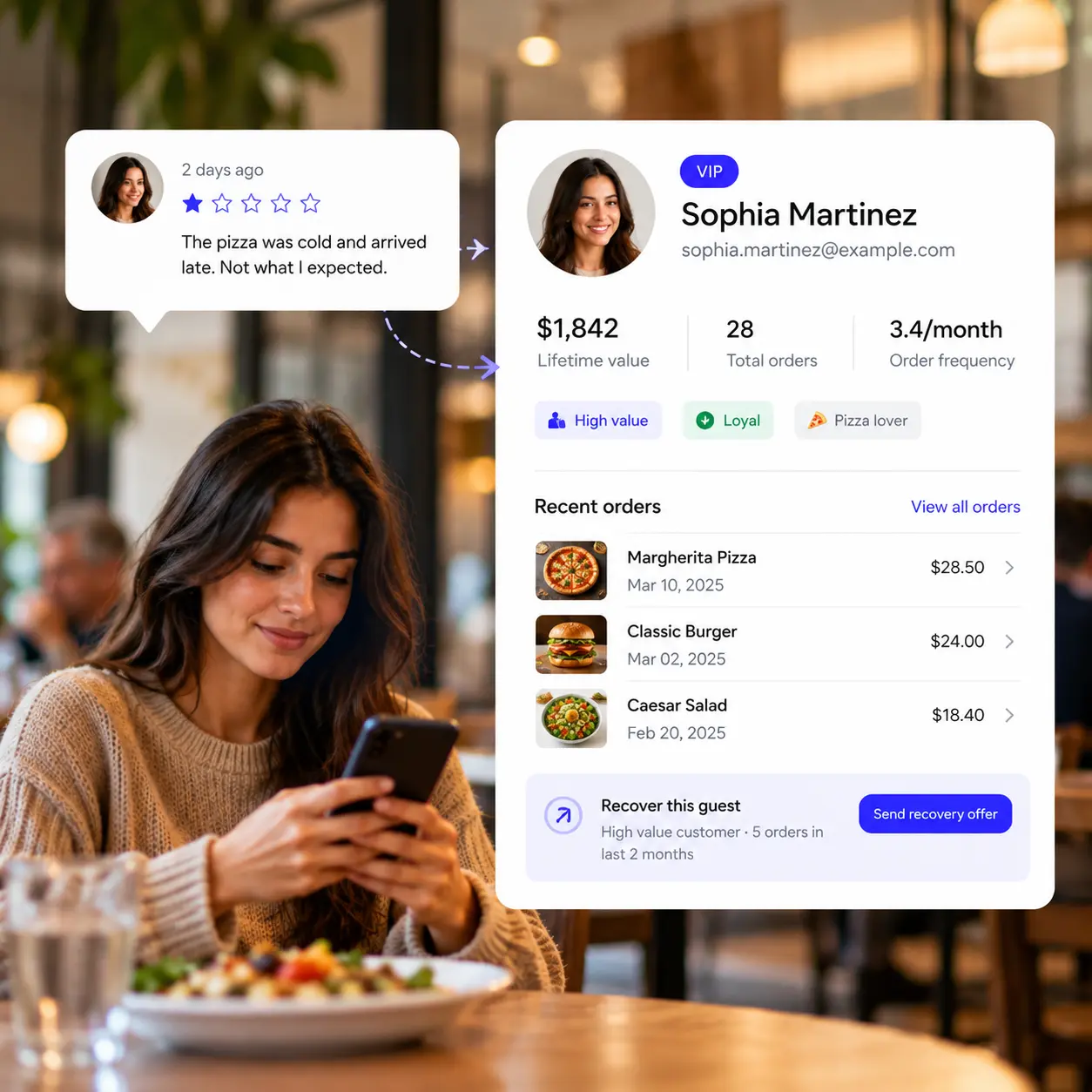
If you run restaurants, you've probably felt this. An order goes wrong and you find out days later, if you find out at all. A star rating shows up with no name, no order number and no way to reply. You can't tell whether the cold-food complaint at one store is a one-off or the third one this week. You can't tell whether the person who complained orders once a year or every Friday.
You're running your stores on someone else's view of your own customers.
What one operator did about it
We worked with a multi-store QSR brand that was in exactly this spot. Most of their online orders came through third-party platforms, and almost none of the feedback came back to them in a form they could use.
They didn't switch platforms. They changed one thing: about an hour after a guest placed an order, they asked them directly how it went.
They didn't ask the guest to “leave us a review” or give a star rating. They asked two plain questions: how was the food, and how was the service? The meal was still fresh in the guest's mind. It took about thirty seconds, and the answers went straight to the brand instead of to a platform.
That one change gave them something they'd never had: a steady stream of honest feedback, tied to real orders, coming in every day.
Feedback is only useful if someone can act on it
This is where most brands get stuck. Collecting feedback is easy. Making sense of thousands of responses across dozens of stores, every week, is the hard part.
So we built the intelligence around it:
- Every response connects to a guest. Each piece of feedback joins that guest's profile and order history. A complaint from a weekly regular is a different problem from a first-time order, and now the operator can see which is which.
- Every issue gets a priority. Feedback is grouped into themes like food quality, service speed and order accuracy. Then it's ranked by how often the issue repeats, which store it's coming from and how valuable the affected guests are.
- Every store gets a weekly read. Each week the team sees which stores are slipping, what's going wrong in each one, and whether last week's fix is actually working.
Over two months, they collected more than 4,600 feedback responses across 56 stores. Most stores were fine; low ratings averaged about 6.5% across the network. But a handful weren't. At the worst store, more than a third of all feedback was negative, over five times the network average. Before this, that store looked like just another number in a monthly report.
Once the team could see it, they could fix it. Several of the struggling stores cut their share of negative feedback by 8 to 16 points, and six stores raised their average rating by 0.3 or more.
We'll be honest about one thing: we haven't yet tied those improvements to sales. That's what we're measuring next. What we can say is that guests told the brand what was wrong, the brand heard it, and the stores got better.
How to start owning your guest feedback
You don't need a new platform to do this. Here are a few things any operator can try.
-
Ask soon, while it's fresh.
An hour after the order is about right. Wait a few days and the guest has moved on, and you'll mostly hear from people who are angry.
-
Ask about food and service, not stars.
“How was the food? How was the service?” gets you answers you can act on. A star rating tells you something went wrong, but not what.
-
Try this first
Put a QR code on the bag.
Here's an idea worth trying if online orders are a big share of your business: print a QR code on the bag, sticker or receipt that opens the same short feedback form. The guest scans it while they eat, and the response comes to you, not the platform. It's cheap, it works with any ordering system, and it's one of the simplest ways to start getting your guests back.
-
Tie every response to a guest and a store.
“Food was cold” is useful. “Food was cold, from a guest who orders every week, at a store where it's the fifth complaint this week” is something you can fix today.
-
Read it weekly, by store.
Don't wait for the monthly P&L. Problems at store level build up slowly, and by the time they show up in sales the guests have already gone somewhere else.
The bottom line
Your guests are already telling someone what's wrong. Make sure it's you.
If you want help setting this up across your stores, talk to us.
Know an operator who'd find this useful? Pass it on.